
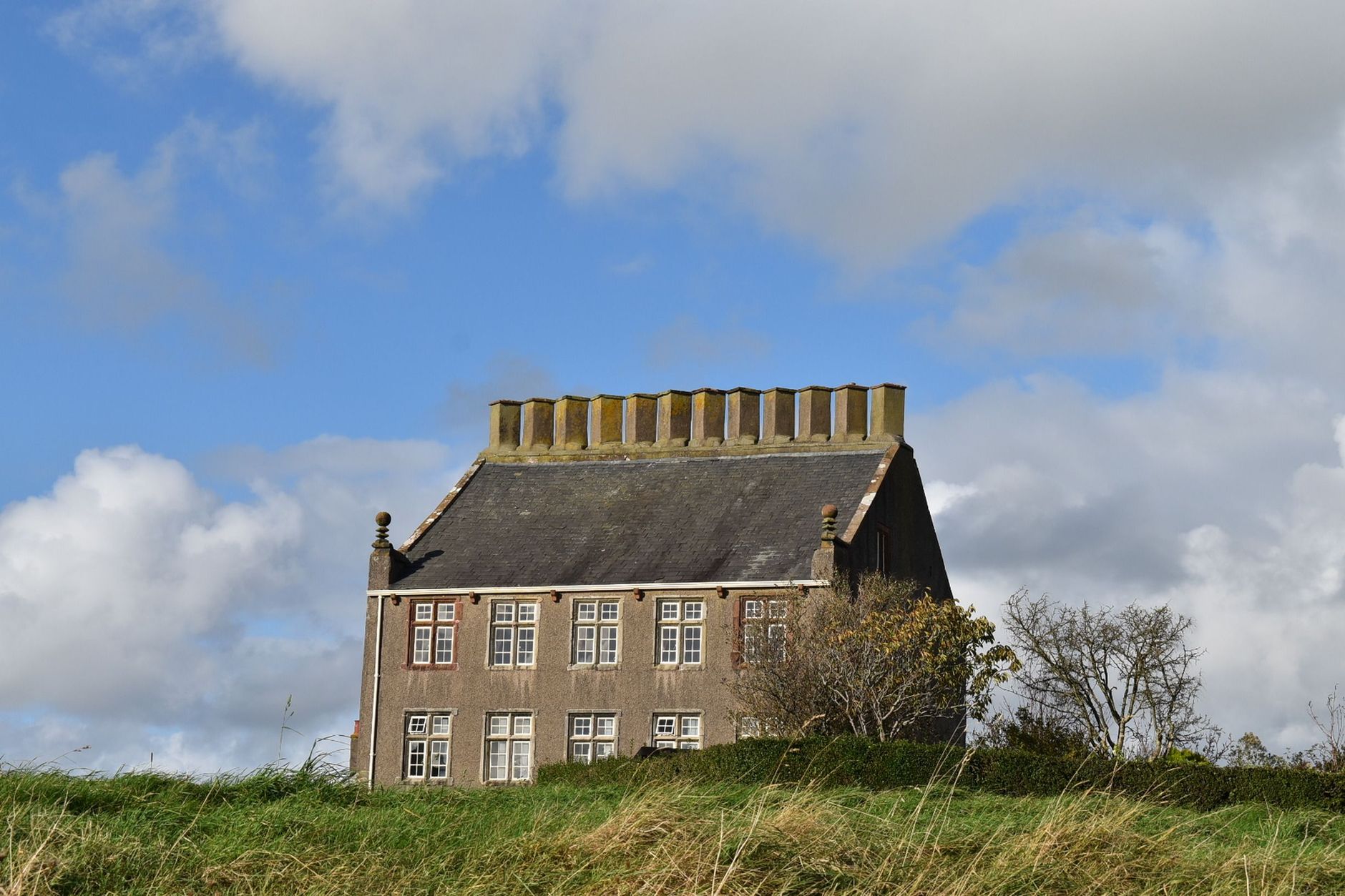
Chimney Caps, Sweeps and Inspections Out of Cudahy
Is Your Chimney on Our List?
Give us the neighborhood and a line about the chimney: wood or gas, last sweep, cap or no cap. We call back with a day we are nearby.
Home base on Atlantic Avenue in the southeast basin
Cudahy
Only 14% of homes in town are owner-occupied, and 68% predate 1980. On these post-war brick and block stacks, our visit starts at the top with the cap and its ember screen, then works down the flue.
Old oil field hills northeast of our home base
Montebello
Down the road from the 1840s Juan Matias Sanchez Adobe, 84% of homes went up before 1980, and postwar houses with a fireplace usually carry a brick masonry chimney. Ahead of each burning season we fit or check the cap and spark screen, then sweep the flue.
The big city west of us, Basin to Valley
Los Angeles
From the Carroll Avenue Victorians in Angelino Heights to the West Adams historic district, 28% of the city's homes predate 1950. An old brick flue under a tired cap can let sparks out onto a roof, so a Kilbride sweep and inspection begins at the cap.
Home of Panda Express, in the San Gabriel Valley
Rosemead
Incorporated in 1959, this city has 77% of its homes built before 1980, most of them detached houses on modest lots. Each has its own chimney top, and one without a screen can drop embers on the roof next door.
Freeway foothill city below Ladyface Mountain
Agoura Hills
The suburb grew up along the freeway over three decades, the 1960s to the 1980s. In 1970s and newer houses the flue is often metal, boxed in a framed chase, and a rusted spark arrestor on top is a weak point in fire country, so we start with it.
Old streetcar suburb along the 10 Freeway
Alhambra
Alhambra filled in as a streetcar suburb from the 1900s through the 1930s, and its 1920s to 1940s homes are likely to have brick chimneys built on site. Worn mortar in stacks like these can pass heat and sparks, so our sweep includes a close look at the joints.
Santa Anita foothill city at the mountain edge
Arcadia
Brick or block chimneys, many refitted with gas logs, sit on the post-war houses, while homes from the 1970s on lean toward metal fireboxes in framed chases. Each type takes its own style of cap, and 58% of homes here are owner-occupied.
Old dairy country on the 91 Freeway corridor
Artesia
Portuguese and Dutch dairy families shaped the early town before tract housing filled the farmland in the 1950s and 1960s. Those ranch houses are decades old now, so a sweep and a fresh look at the cap belong before the first fire of winter.
Catalina Island town across the channel by ferry
Avalon
Here 52% of homes were built before 1950, from Spanish Revival houses to the 1890 Queen Anne on the hilltop. On an island town this close to the water, we look at cap mesh and flue metal for rust first.
Route 66 foothill town below the San Gabriels
Azusa
Near Citrus Avenue and Foothill Boulevard stand bungalows from the 1880s and 1890s, and ranch tracts came after World War II. Old or new, a chimney this close to the mountains wants a cap that stops embers.
San Gabriel Valley tract town named for Lucky Baldwin
Baldwin Park
Citrus and walnut groves became tract streets after the war, and 68% of homes are detached houses. Every rooftop has its own flue opening, and a fitted cap with a spark screen is what we install or check on each.
Dense rental city just north of the base
Bell
Owners hold only 26% of homes, and 39% date from before 1950, the era of site-built brick chimneys. Mortar that old wears thin, and gaps can let sparks reach framing, so our inspection starts at the crown and cap.
Small-lot bungalow city east of the base
Bell Gardens
Many of the 1930s families who built small homes on subdivided farmland here came from the Dust Bowl. The post-war houses that followed often carry brick or block chimneys now fitted with gas logs, and a gas flue still needs a cap.
Old Dutch and Japanese farm town southeast of us
Bellflower
Bellflower incorporated in 1957, 71% of its homes predate 1980, and 39% are owner-occupied. With apartments, townhomes and small houses close together, one unscreened chimney can send sparks toward several roofs.
Flats and canyon estates northwest of downtown
Beverly Hills
The Flats are largely 1920s and 1930s houses, and Trousdale Estates, built out in the 1950s and 1960s, brought mid-century modern design to the hillside. On a hillside lot, a cap with intact mesh is what keeps embers out of the flue.
Tiny gated foothill city in the San Gabriel Valley
Bradbury
With about 350 housing units, 97% detached and 93% owner-occupied, and no large tract subdivisions, each house is its own case. Our inspection looks at the actual cap, screen and flue rather than a tract pattern.
Airport and studio town under the Verdugos
Burbank
Aviation and film jobs drove heavy home building here through the 1930s, 1940s and 1950s, and hillside homes climb toward the Verdugos. Up there, a cap with tight mesh matters most when fall winds carry embers.
Gated hill communities on the inland mountain side
Calabasas
Only 38% of homes predate 1980, and 69% are owner-occupied, many in gated communities that spread into the hills. Newer homes still need a working spark arrestor, the part that keeps embers from leaving or entering the flue.
Valley neighborhood at the Los Angeles River's start
Canoga Park
Founded as Owensmouth in 1912, Canoga Park kept some 1910s and 1920s bungalows among its post-war ranch tracts. Brick of either age cracks with time, and a crack near the top can leak sparks, so the crown gets checked.
South Bay city of refineries and an airship base
Carson
Ownership runs at 74%, high for the South Bay, and 72% of homes are detached houses. Before no-burn alerts start on November 1, we sweep the flue and confirm the cap still keeps sparks in.
Master-planned suburb on old dairy ground
Cerritos
Once dairy land, the city filled with master-planned tracts during the 1960s and 1970s, and 80% of homes are detached. Houses from the 1970s on often have metal fireplaces in framed chases, where a rusted cap or chase top lets water and sparks through.
Leafy college town under the San Gabriel foothills
Claremont
Trees and PhDs give Claremont its nickname, and its 1920s to 1940s homes are likely to carry site-built brick chimneys, where the mortar wears with age. Under all those trees, a screened cap keeps sparks off leaves and branches.
Mostly industrial city with a few home pockets
Commerce
Commerce is mostly industrial, with homes in a few small pockets such as Rosewood and Bandini. Post-war houses there commonly carry brick or block chimneys, and gas logs often went in later; the cap still matters on a gas flue.
Old incorporated city on the Metro A Line
Compton
Incorporated in 1888, Compton grew into neighborhoods of small post-war stucco ranch homes, and 56% are owner-occupied. Brick or block chimneys from that era often hold gas logs now, and we still check the cap and screen on each.
Citrus Avenue town in the east San Gabriel Valley
Covina
Though Covina incorporated in 1901, most of its homes are ranch houses built after the war, in the 1950s and 1960s, with brick or block chimneys, many now running gas logs. A gas conversion does not remove the need for a capped, screened flue.
Studio-era city on the Baldwin Hills edge
Culver City
Bungalow blocks filled in through the 1920s after Harry Culver's 1913 founding, and 84% of homes here predate 1980. Ember screens on old brick and on 1970s metal flues wear out differently, so Kilbride checks each kind on its own terms.
Hill-country tract suburb off Grand Avenue
Diamond Bar
Here 50% of the housing predates 1980 and 77% is owner-occupied, much of it stucco and tile on hillside tracts. A chimney top on a slope catches every gust, so the cap and its spark mesh get fastened down before fall.
Stonewood Center city southeast of our base
Downey
Downey's tree-lined tract streets hold single-story ranch homes, and 83% of all housing predates 1980. Branches over a roof and an open flue make a poor pair in ember season, so a screened cap is the first item on our list.
City of Hope town at the San Gabriel foothills
Duarte
Named for Andres Duarte of the Rancho Azusa de Duarte grant, the city is 64% detached houses. Post-war chimneys of brick or block, many since given gas logs, still need a cap that blocks foothill embers.
Old San Gabriel Valley town of small homes and rentals
El Monte
Incorporated in 1912, El Monte has 69% of its homes built before 1980 and only 40% owner-occupied. Post-war brick or block chimneys here often run gas logs now, and Kilbride still checks that each cap keeps sparks and rain where they belong.
Refinery town by the beach, west of Sepulveda
El Segundo
Small worker houses rose near the 1911 Standard Oil refinery and now share blocks with post-war homes; 73% of housing is older than 1980. Sea air works on spark screens here, so ours are checked for holes before the burning season.
Incorporated 1930 town known for its card clubs
Gardena
The early town took its shape from berry farms and Japanese American families; tract homes came after World War II. With 49% owner-occupied and 72% of homes built before 1980, our sweep and cap check covers a lot of aging masonry.
Brand Boulevard city between the Valley and the Basin
Glendale
29% of Glendale homes date from before 1950, the stretch when brick chimneys were built on site, and that mortar now shows its age. Gaps in it can pass embers, so our inspection reads every joint from crown to firebox.
Bougainvillea foothill town under the San Gabriels
Glendora
Glendora began as a citrus town, and some homes near the Village date from the 1900s and 1920s; 68% are owner-occupied today. Post-war houses usually came with brick or block chimneys, and an open one is a doorway for embers.
Tiny, dense city southeast of the base
Hawaiian Gardens
Incorporated in 1964, this tiny city is densely settled, with 45% detached houses and 44% owner-occupied. Homes sit close, so one chimney without a spark screen puts more than one roof at risk.
Aviation-born South Bay city, home to SpaceX
Hawthorne
Hawthorne's tract homes and bungalows came with aviation work, starting in the 1930s and running into the 1960s. Only 27% of homes are owner-occupied, and in a city where most households rent, a swept flue with a sound cap protects everyone under that roof.
Pocket-size beach city of walk streets
Hermosa Beach
Hermosa covers about 1.4 square miles, and 71% of its homes were built before 1980, while the Sand Section packs small lots and tall rebuilds. Fog and salt eat at cap mesh here, so a Kilbride visit checks every screen for rust holes.
Gated private ranch community near the Valley edge
Hidden Hills
A.E. Hanson, a landscape architect, laid out this planned ranch-style community starting around 1950, and the city has only detached homes. Older ranch houses often have masonry chimneys, while newer custom homes have replaced many, so we inspect what each lot actually has.
Pacific Boulevard shopping city just northwest of us
Huntington Park
Before 1950 came 42% of the housing here, and most households rent. With added units on many older lots, a tight spark screen keeps embers off the buildings next door.
Industrial core with a small number of homes
Industry
About 40 housing units exist in all of Industry, so the census sample is tiny and rough. For the few homes that do have a fireplace, our visit covers the cap, spark screen and flue like anywhere else.
Stadium city on the Newport-Inglewood Fault
Inglewood
Older neighborhoods such as Morningside Park and Fairview Heights have Spanish style and stucco houses, built from the 1920s to 1940s, and 32% of the city's homes predate 1950. Brick that old can hide gaps behind the mortar, and we look for them before ember season.
San Gabriel River town of gravel pits and Santa Fe Dam
Irwindale
Only 42% of homes here predate 1980, so factory-built fireplaces show up alongside some older masonry chimneys. 92% are detached houses, and each metal or brick flue gets a cap fitted to its type.
Foothill suburb at about 1,200 feet
La Canada Flintridge
Senator Frank Flint started building Flintridge hillside estates in the 1920s, and today 94% of homes are detached and 87% owner-occupied. On hillside lots under the San Gabriels, the spark arrestor is the part we check first.
Hillside town of canyons and the Hacienda Golf Club
La Habra Heights
Unusually for Los Angeles County, 1.4 percent of households here rely on wood as their main heat, per ACS data. More wood fires mean more embers leaving the flue, so the spark arrestor and a regular sweep matter here.
Santa Ana Freeway suburb on old ranch and olive land
La Mirada
Pre-1950 homes are very few; most were built in the 1950s and 1960s, when ranch and olive land became tracts. Those tract fireplaces are typically brick masonry, factory-built units came in some later houses, and both need a sound cap.
Old walnut country, incorporated in 1956
La Puente
La Puente is 60% owner-occupied, and 81% of homes predate 1980. In that era's tract houses, a fireplace usually came with a brick or block chimney, and we fit or check a screened cap on each.
Old Lordsburg citrus and college town at the foothills
La Verne
Lordsburg, a citrus and Brethren college town of the late 1880s, became La Verne, and tracts spread heavily between the 1960s and the 1980s. Brick chimneys may appear on older homes, the later ones often have factory-built units, and each type takes its own kind of spark arrestor.
Mass-built 1950s suburb around a regional mall
Lakewood
Lakewood went up in one rush, roughly 1950 through 1953, among America's first mass-produced suburbs. Where a tract model got a fireplace, expect a brick or block chimney just as old.
Antelope Valley railroad town turned desert suburb
Lancaster
Founded as a railroad stop, Lancaster boomed late: the 1980s, the 1990s, the 2000s. Only 34% of homes predate 1980, and newer ones usually carry factory-built fireplaces, metal flue and all, so the cap and chase top are what we check first.
Small Hawthorne Boulevard city of narrow lots
Lawndale
Most households here rent, and multi-unit properties are common; only 37% of homes are owner-occupied. On narrow lots, a chimney without a spark screen can send sparks onto the roof next door.
Railroad museum town at the peninsula's foot
Lomita
Farm land turned to housing here mostly from the 1940s into the 1970s. With 79% of homes older than 1980 and postwar brick chimneys common, Kilbride starts each visit with the crown, the cap and its ember mesh.
Port city south of us, from harbor to Alamitos Beach
Long Beach
The 1933 quake damaged many older brick chimneys here, and others were rebuilt after it; 34% of homes predate 1950. Our inspection checks how a rebuilt stack ties to the house before we fit a new spark-screen cap.
Old dairy-family town just south of the base
Lynwood
Lynwood takes its name from Lynn Wood Sessions, married to a local dairy owner. Before 1950 came 45% of its homes, and where those older houses have a fireplace, the chimney is usually brick, and aged brick at the top is where embers find a way out.
Long, thin coast city on the Pacific
Malibu
Malibu took shape on the old Rindge ranch once the coast road was open, from 1929, and Malibu Colony began as 1920s beach cottages. Wildfire has claimed masonry-chimney homes in the canyons and on the beach before, so the cap and spark arrestor come first on every visit.
Oceanfront South Bay town, El Porto to the Tree Section
Manhattan Beach
Small cottages started the town after 1900, and big multi-story houses on narrow lots have since replaced many; 65% are owner-occupied. A new chimney chase on a tall house still needs a cap whose mesh blocks sparks.
Densely packed little city north of us
Maywood
Built out almost completely, Maywood has few new houses, and 44% date from before 1950. Owner-occupied homes make up just 31%, and close quarters make a working spark screen a shared concern on every block.
1880s boom town at the San Gabriel foothills
Monrovia
An 1880s boom town, Monrovia still has Victorian and Craftsman houses close to Old Town, where brick chimneys are common and some are river rock. River rock and old mortar both need a careful look before ember season.
Hilly city on the San Gabriel Valley's west edge
Monterey Park
Hill streets climb over sloping lots, where masonry fireplaces sit near later ones, and 79% of homes predate 1980. Some hillside brush grows within city limits, so a tight cap on a hill house is part of our ember check.
Freeway city at the Metro C Line's east end
Norwalk
Owners hold 68% of homes in Norwalk, and 83% were built before 1980. Tract fireplaces of that time are typically brick masonry, which ages at the crown first, so the cap and crown are where our visit begins.
Antelope Valley city against the mountains at Lake Palmdale
Palmdale
Just 19% of homes here predate 1980, and 79% are detached. Ranch houses from the 1950s and 1960s, the older stock, may have masonry chimneys, while the rest are newer, and each type gets a cap check before the windy season.
Peninsula city above the Pacific, around Malaga Cove
Palos Verdes Estates
Stucco walls and red tile roofs mark the earliest Mediterranean and Spanish Revival homes, and much of what came later is postwar ranch or mid-century custom work on larger lots. With 90% owner-occupied, a cap with sound mesh protects many a tile roof from sparks.
Old hay market town south of the base
Paramount
Incorporated in 1957, the city keeps the Hay Tree as its symbol, and 42% of homes are detached houses. Older houses that have fireplaces typically carry brick masonry chimneys, and an uncapped one is an open path for sparks.
Rose Bowl city north of us at the foothills
Pasadena
In landmark districts such as Prospect, Garfield Heights and Orange Heights, many older chimneys are river rock or brick and unreinforced, a known quake concern. After the Eaton Fire, the cap and spark arrestor are where every Kilbride visit starts.
Owner-occupied tract city bounded by the Rio Hondo
Pico Rivera
Here 86% of homes predate 1980, and owners occupy most of the detached houses. Tract fireplaces from that era are typically brick masonry, and we check each crown and cap for gaps where a spark could escape.
Pomona Valley city home to the county fair
Pomona
Citrus built Pomona from the 1880s, and its older areas hold Victorian and Craftsman homes, where brick masonry chimneys are common. Later homes may have factory-built units, and both kinds need a spark screen that is intact.
Coastal peninsula city of Portuguese Bend and Terranea
Rancho Palos Verdes
Some homes at Portuguese Bend have faced evacuations and utility cuts as the land moves, a hazard few places share. Shifting ground can stress a masonry chimney, so we look at the stack and its cap with that in mind.
1890s port and resort town on the shore
Redondo Beach
Redondo was a port and resort in the 1890s, its first cottages by the coast; later decades added large numbers of condos, townhomes and apartments, especially by the water. Older houses commonly have masonry chimneys, while the newer units usually run factory-built gas fireplaces.
Gated equestrian town on private roads
Rolling Hills
Here 75% of homes predate 1980; on older ranch houses a brick or masonry chimney is likely, and some have since been remodeled for gas. A brush fire out of Portuguese Bend destroyed some homes here in August 2009, which is why the ember screen comes first.
Peninsula horse country around the Promenade
Rolling Hills Estates
Owners hold 88% of homes. Masonry is the likely chimney on an older ranch house, and a remodel can bring in gas or factory-built units; near horse lots and stables, a spark screen in good shape matters.
Old railroad citrus town under the San Gabriels
San Dimas
Citrus and the railroad started San Dimas in 1887, and most suburban growth came between the 1960s and the 1980s; 72% of homes are owner-occupied. Foothill homes like these need a cap that stops embers before the fire months.
Small Valley city with its own Lopez Adobe
San Fernando
After hard shaking in both 1971 and 1994, it is likely that some older chimneys were rebuilt or replaced here, and 33% of homes predate 1950. Unreinforced brick, common on pre-code chimneys, is the type quakes damage most, so we check the stack before the cap.
Mission city in the west San Gabriel Valley
San Gabriel
Here 38% of homes predate 1950, and pre-code brick chimneys are often unreinforced. Those are the stacks quakes damage most easily, and a cracked one can leak embers into the attic.
Lacy Park city of large lots and old estates
San Marino
Here 69% of homes were built before 1950, and almost every unit is a detached house, the bulk built from the 1920s onward. Pre-code brick chimneys here are often unreinforced, so ours is a stack-and-cap check, not just a sweep.
Santa Clara River valley city, incorporated in 1987
Santa Clarita
Formed as a city in 1987, Santa Clarita has only 31% of homes from before 1980, and condos and townhomes are common. Homes at the city's edge were destroyed in the 2016 Sand Fire, so the spark arrestor on every chimney gets our attention first.
Industrial and warehouse city with home pockets
Santa Fe Springs
Industry and warehouses dominate here, and homes sit in pockets, with very few built before 1950. A typical postwar tract house here has one brick chimney, steel-reinforced in many cases, decades old by now, so age shows first at the crown and cap.
Pier city on the bay, west of downtown
Santa Monica
Only 19% of homes here are detached and 28% owner-occupied. Courtyard buildings from the 1930s and 1940s survive in the San Vicente Boulevard historic district, and on masonry that age, our ember check starts at the cap.
Wistaria Vine village at the Mount Wilson trailhead
Sierra Madre
Here 30% of houses predate 1950, from village cottages and Craftsman bungalows to canyon homes pushing toward the mountains. Pre-code brick can be unreinforced, and up a canyon, the spark arrestor matters as much as the brick.
Ventura Boulevard neighborhood at the freeway junction
Sherman Oaks
Postwar building filled lots first laid out in the late 1920s. Above Ventura Boulevard to the south, slopes fall in Los Angeles very high fire hazard severity zones, and up there an ember screen with no gaps comes first.
Old oil field hill with views over the port
Signal Hill
For decades the derricks won, and houses waited. Redevelopment from the 1980s finally put condos, townhomes and crest homes up there. Even a newer flue wants a cap with a sound ember screen, and older brick downhill gets inspected.
Rosemead Boulevard city incorporated in 1958
South El Monte
South El Monte is 66% detached houses, and 77% of homes are older than 1980. Most postwar tract houses carry a single brick chimney, many with steel inside, and decades of heat and weather sit on each crown.
Factory-town suburb just southwest of our base
South Gate
A 1923 incorporation made South Gate a working-class suburb tied to large factories; 47% of homes predate 1950. Houses share blocks with small apartment buildings, so a single torn ember screen puts many roofs at risk.
Oaklawn Bridge town that fought the 710
South Pasadena
Here 44% of homes predate 1950, and early chimneys are typically brick, a few of them built before clay liners became standard. An unlined flue can pass heat and sparks into framing, so a sweep and inspection come before the first fire.
Las Tunas Drive city in the San Gabriel Valley
Temple City
Owners hold 63% of homes, and 80% are detached. Rebuilt lots carry some larger modern homes, usually fitted with gas fireplaces, and the postwar tracts typically keep one brick chimney; both need a cap that holds against embers.
Large South Bay city around Old Torrance
Torrance
Old Torrance holds the first small houses; postwar tracts make up the rest. Of all homes, 82% predate 1980, and the usual tract chimney is one brick stack that has seen decades of embers and weather.
Almost wholly industrial city next to our base
Vernon
Only about a hundred housing units stand in a city founded in 1905 for industry. Few homes means few fireplaces, but each one still needs a cap and screen that keep sparks off nearby roofs.
Snow Creek and Lemon Creek park suburb, east of us
Walnut
Most of Walnut was built in the 1960s through the 1990s, after its 1959 incorporation, and it is 95% detached and 84% owner-occupied. Metal fireplaces from the 1970s on age in their own way, so the metal cap and chase top get checked for rust and gaps.
Large San Gabriel Valley city around Plaza West Covina
West Covina
Here 77% of homes predate 1980 and 60% are owner-occupied. The postwar tract chimney here is usually a lone brick stack, often steel-reinforced, now decades old, and age shows first where the crown meets the cap.
Sunset Strip city, incorporated in 1984
West Hollywood
Only 9% of homes are detached, 20% are owner-occupied, and a historic district on Harper Avenue keeps 1920s courtyard apartments. Pre-code brick chimneys are often unreinforced, and we check the stack along with the cap.
Planned lakeside city on the county line
Westlake Village
A master plan on the old Albertson Ranch, begun in the 1960s, put homes around an artificial lake, and 81% are owner-occupied. Lakefront custom homes sit beside 1970s stucco tracts, and either way the spark arrestor is our first stop.
Uptown city named for poet John Greenleaf Whittier
Whittier
Quakers founded the town in 1887, and its oldest homes sit around Uptown, Craftsman bungalows among them. With 88% of housing older than 1980, crowns and caps on these chimneys are long past new.
Ventura County city of master-planned stucco tracts
Camarillo
Only 45% of homes predate 1980, and many tracts from the 1970s on hold metal fireplaces. A metal cap ages unlike brick, and one that rusts through is an easy exit for sparks.
Citrus town named for Southern Pacific man J.A. Fillmore
Fillmore
The old core keeps early 20th century bungalows, with later tract homes on all sides. In 1994 the quake badly hurt downtown, homes and historic buildings both, so chimneys here get a close look for old repairs and new cracks.
Apricot-named town on the Arroyo Las Posas
Moorpark
Just 20% of the housing is older than 1980, with the oldest near High Street. Metal fireplaces, common in tracts from about the 1970s, wear differently than brick, so we check the cap and chase.
Spanish Colonial valley town of the Pink Moment
Ojai
The 1921 town owes its Spanish Colonial main street to glass magnate Edward Libbey, about 1917, and 76% of homes predate 1980. After the 2017 fire came close to circling this valley, a sound spark arrestor is not optional.
Ventura County's biggest city, built on the plain
Oxnard
A sugar beet factory opened in 1898, Oxnard grew up around it and incorporated in 1903, and only 54% of units are detached. Condos, apartments and houses alike need a cap that keeps sparks in when the wind picks up.
Navy town beside the Seabee base
Port Hueneme
Condo complexes face the sand, and detached homes are the minority of units, about a third. On a postwar house, expect a single brick stack, often steel-reinforced; in salt fog, its cap and flashing are what we check first.
Limoneira's home, the Citrus Capital of the World
Santa Paula
Downtown, Victorian homes stand near Craftsman bungalows, in a city incorporated in 1902 on citrus and oil. With 73% of housing older than 1980, old brick in a fire-prone valley needs a tight cap.
Valley city over the Santa Susana Pass
Simi Valley
Here 50% of homes predate 1980 and 73% are owner-occupied. The 1994 quake caused significant damage in the city, many chimneys included, so a Kilbride inspection checks old repairs before a new cap goes on.
Conejo Valley city of Amgen and Cal Lutheran
Thousand Oaks
The Janss Investment Company started the Conejo Village plan in the 1950s, the city incorporated in 1964, and 71% of homes are owner-occupied. In 1994, shaking damaged Conejo Valley homes and chimneys, so the stack gets checked with the cap.
San Buenaventura, the mission city by the harbor
Ventura
Ventura, formally San Buenaventura, has a mission founded in 1782 and incorporated in 1866, and the Mitchell Block keeps late 19th century houses. Older brick chimneys here are often unreinforced, and near the beach, salt adds to the wear.
Planned canyon-edge city inland of Laguna Beach
Aliso Viejo
Only 6% of homes predate 1980 and 36% are detached, so factory-built metal fireplaces are the norm. A metal flue and cap wear unlike brick, and with Aliso and Wood Canyons Wilderness Park at the edge of town, a tight ember screen matters.
Disneyland's home, founded by German winemakers in 1857
Anaheim
Postwar tract roofs here usually carry one brick stack, often steel-reinforced, and those stacks are now decades old; 65% of homes predate 1980. The oldest house, the Mother Colony House, dates from 1857, when German winemakers founded the town.
Oil-seep town at the foot of the Puente Hills
Brea
Brea is Spanish for tar, a nod to local oil seeps; Carbon Canyon Regional Park lies east. Many tracts from about the 1970s on run metal fireboxes, and a metal flue and cap wear differently than brick.
Postwar tract city along the Beach Boulevard attractions
Buena Park
Of homes here, 76% predate 1980 and 58% are detached, mostly stucco tracts from the 1950s and 1960s. Caps and crowns that old deserve an inspection before the burning months, embers being what they are.
Coastal mesa city near Newport, home of Vanguard University
Costa Mesa
Under half of units are detached. Eastside streets near Newport hold older homes and midcentury cottages, and the 1950s and 1960s tracts carry one brick chimney apiece, often steel-reinforced, decades old, and taking salt at the cap.
Northwest Orange County suburb, home of Los Alamitos Race Course
Cypress
Dairy land became suburban tracts here mainly in the 1950s through 1970s, and 76% of homes predate 1980. Los Alamitos Race Course is in Cypress, despite the name. Tract chimneys this age want a sweep, an inspection and a sound cap.
Harbor town on the point, its harbor opened in 1971
Dana Point
Here 53% of homes predate 1980, from older Capistrano Beach houses to Monarch Beach estates. The Ocean Institute and the Headlands conservation area sit on the point, and up on the bluffs, salt is hard on every steel cap.
Former Talbert farm country, named for artesian wells
Fountain Valley
Of homes, 82% predate 1980, and fireplaces here split by era: brick or block masonry first, factory-built metal in later tracts. Each type fails differently, so each gets its own inspection. The name recalls artesian wells.
Citrus and Santa Fe railroad town, where Leo Fender built guitars
Fullerton
Of homes, 71% predate 1980. Sunny Hills ranch houses from the postwar decades rely on masonry fireplaces, and Amerige Heights, the newer community where Hughes Aircraft once stood, went factory-built or gas. Leo Fender's guitar business began in town.
Orchard town turned tract city, home of Christ Cathedral
Garden Grove
Most homes are single story stucco ranch houses, wood framed, from the postwar boom that replaced orchards; 77% predate 1980. Parts of Little Saigon and Little Seoul lie within the city, and on these older roofs, the cap is where we start.
Pacific-front city known as Surf City
Huntington Beach
Known as Surf City, Huntington Beach annexed Sunset Beach in 2011, and 69% of its homes predate 1980. A 1960s tract fireplace is likely masonry; by the 1980s metal units had taken over, and each wears in its own way.
Village-planned city, incorporated in 1971
Irvine
Irvine Ranch land became a city in 1971, and University Park and Turtle Rock were among its first villages, followed by Woodbridge in the 1970s. Just 21% of homes predate 1980 and 37% are detached.
The pass, named for the route through the hills
La Habra
Pre-1950 bungalows near downtown are the oldest housing; most of the rest went up as tracts on former groves, and 77% predate 1980. The name means the pass.
Compact northwest Orange County city, once named Dairyland
La Palma
Incorporated in 1955 as Dairyland and renamed La Palma in 1965, the city covers under two square miles. Here 81% of homes predate 1980 and 66% are detached, so caps and crowns here have had decades of weather.
Pageant of the Masters town on the ocean
Laguna Beach
Historic cottages from the art colony era still stand in town and the canyons, many with stone or brick stacks. With 27% of homes built before 1950 and steep land mapped for high fire hazard, caps and screens come first.
Nellie Gail Ranch and bridle trails, in the Saddleback Valley
Laguna Hills
Moulton Ranch land was developed through the 1970s and 1980s, and today 48% of homes predate 1980 and 70% are owner-occupied. Nellie Gail Ranch, an equestrian community, has larger custom and semi-custom homes and well-known bridle trails.
Hill city of the Ziggurat and a lakeside regional park
Laguna Niguel
Here 67% of homes are owner-occupied and 55% detached. Factory-built metal or gas units are typical, though some custom hillside homes have masonry, and a lake sits at the center of the regional park.
Age-restricted city, incorporated in 1999
Laguna Woods
Laguna Woods Village dominates this age-restricted city, generally for residents 55 and older, and 90% of homes predate 1980. Only 7% are detached; low-rise manors, co-op or condominium, house most residents, and one fireplace sits close to many neighbors.
Lake Forest, the old El Toro, by Serrano Creek
Lake Forest
Saddleback Church is the big local landmark, and 70% of homes are owner-occupied and 53% detached. The 1970s El Toro tracts are the older side of town, Baker Ranch the newer; either way, a cap with a sound ember screen comes first.
Small city born of an 1897 sugar beet factory
Los Alamitos
Growth started with an 1897 sugar beet factory, and the San Gabriel River lies to the west. With 70% of homes older than 1980 and multi-family housing common, one chimney's spark screen protects more than one roof.
Saddleback Mountain views and the Nadadores swim club
Mission Viejo
Of homes here, 77% are owner-occupied and 71% detached. Gas or factory-built metal units heat most of them, and early and custom homes sometimes have masonry. The Mission Viejo Nadadores swim club and Saddleback College call the city home.
Harbor and islands city, incorporated in 1906
Newport Beach
Of homes here, 55% predate 1980 and 8% predate 1950. Corona del Mar and Newport Heights blend older cottages with newer custom homes, and older custom homes may have masonry chimneys.
Plaza Square city, incorporated in 1888
Orange
Plaza Square has been the heart since the city incorporated in 1888, and Chapman University is here. Many Old Towne homes still have their original brick chimneys, and 64% of homes citywide predate 1980.
Old citrus town with the 1902 Bradford House
Placentia
A citrus packing past shaped the early town, and the A. S. Bradford House of 1902 is its landmark. Of homes, 60% predate 1980, most of them stucco ranch homes of the 1950s to 1970s, chimneys and caps decades into service.
Newer foothill city below the Santa Ana Mountains
Rancho Santa Margarita
Most fireplaces here are factory-built metal or gas, direct-vent units common, in a city that incorporated in 2000 and has 72% owner-occupied homes. Just 4% of homes predate 1980.
Pier town Ole Hanson planned in 1925
San Clemente
Talega, a newer tract from the 1990s on, borders brushy hills on the east side, where an ember screen on every cap matters. Of homes, 66% are owner-occupied and 57% detached.
Mission town known for the swallows returning each March
San Juan Capistrano
Equestrian properties remain part of the character here, and 53% of homes predate 1980. Adobe or masonry fireplaces turn up in older buildings, factory-built or gas units in newer ones, and canyon brush around town makes the cap's screen matter.
Orange County's seat, with Bowers Museum and Fourth Street
Santa Ana
Founded in 1869 and incorporated in 1886, the city has 74% of homes from before 1980, and apartments are common. Period revival homes in Floral Park date from the 1920s and 1930s.
Old town on Main Street and the pier
Seal Beach
Main Street and the Seal Beach Pier make up the old town, and the National Wildlife Refuge sits within the base. With 89% of homes from before 1980 and 77% owner-occupied, caps and crowns are well along in years.
Philip A. Stanton's namesake city on Beach Boulevard
Stanton
Named for Philip A. Stanton, the city has 65% of homes from before 1980, many small stucco tract houses. Brick or block masonry fireplaces are likely in older homes; many apartments and condos have none.
Old Town Tustin and the Tustin Legacy redevelopment
Tustin
Shops line Main Street and El Camino Real in Old Town, where early 1900s homes keep brick chimneys. Tustin Legacy is redeveloping the former base, and 47% of homes in the city predate 1980.
Small residential city of custom homes on large lots
Villa Park
Large-lot custom homes went up largely in the 1960s and 1970s, and Villa Park High School is the local landmark. Santiago Oaks Regional Park lies to the east, and 82% of homes predate 1980.
Presbyterian temperance colony of 1870, now a tract city
Westminster
A Presbyterian temperance colony founded in 1870, Westminster incorporated in 1957, and 76% of its homes predate 1980. Masonry of brick or block is likely in fireplaces from those years, factory-built units in later homes.
Nixon's birthplace, incorporated in 1967
Yorba Linda
Homes here sit on larger lots: 75% are detached and 83% owner-occupied. Many use factory-built or gas fireplaces, masonry appears in custom homes, and after the 2020 Blue Ridge Fire damaged homes, a working ember screen matters.
Birthplace of the California navel orange industry
Riverside
UC Riverside started as a citrus station, its campus opening in 1954, and 57% of homes in the city predate 1980. Larger lots and hillside houses mark Alessandro Heights; Canyon Crest and Orangecrest are newer.
The Circle City on Grand Boulevard
Corona
Grand Boulevard, which hosted road races between 1913 and 1916, gave Corona the name Circle City. Only 25% of homes predate 1980, so gas or factory-built metal is the likely fireplace, with masonry in some older houses.
The whole county, beaches to mountain communities
Los Angeles County
Across the county, 24% of homes predate 1950 and 47% are detached. Craftsman, Spanish and Victorian homes cluster in historic places such as Pasadena, prewar neighborhoods commonly keep masonry chimneys, and newer construction goes factory-built or gas.
County page: inland valley to desert
Riverside County
The county has about 870,000 homes, 69% detached, and 30% predate 1980. Riverside and Corona hold the older masonry-chimney neighborhoods, and unincorporated communities include Temescal Valley and Woodcrest.
County page for Orange County, seat at Santa Ana
Orange County
Santa Ana is the county seat, and 4% of homes countywide predate 1950. Old Towne Orange and Floral Park are notable among the north's historic homes, and 56% of homes are owner-occupied.
County page for Ventura County, formed in 1873
Ventura County
Ventura County has ten cities, and 55% of homes predate 1980 and 65% are owner-occupied. Agricultural areas such as Santa Paula have ranch and farm homes, where older brick deserves an inspection.
Your street missing from these pages?
Send your cross streets through the contact form. When the crew is already on a roof near you, another stop can often fit the same week.