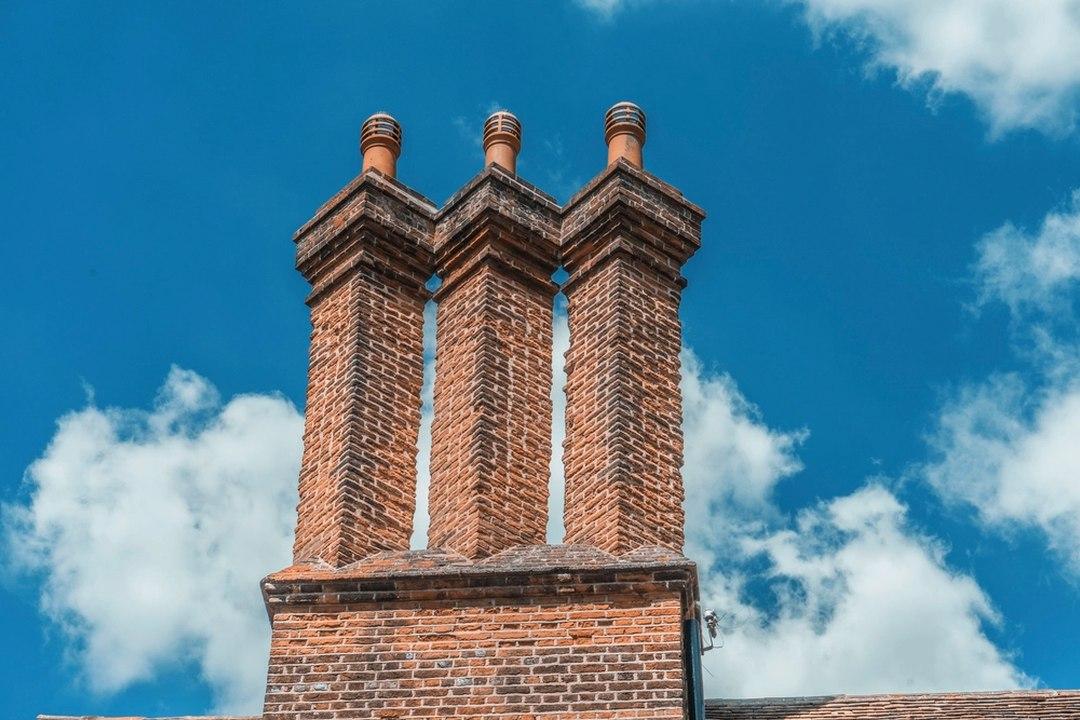
A cap is a simple fire job on the house
Most of the year a chimney cap is a lid and nothing more. In the windy months it takes on a second job: it holds back the sparks rising out of your own fire and the burning litter that blows in from somebody else's. In Cudahy, where roofs sit a few yards apart and autumn Santa Ana gusts push dry air across the basin, that second job matters more than the first. Kilbride Chimney Services fits caps with a built-in spark arrestor screen, quoted after we measure. This post explains what sets the price for your house.
Fire moves both ways through an open flue
Going up, a hot fire in the grate throws scraps of burning paper and bark out of the top. With nothing to catch them, they can land in a gutter packed with dry leaves, on a neighbor's old wood shingles or in the skirt of a palm. Going down, a gust carrying ash from a brush fire in the hills can drop glowing flakes into an uncapped flue, where they settle on the smoke shelf among old soot and twigs. Neither happens much on a still day. Both become real on the red flag days that arrive with each dry season.
A cap with a mesh skirt stops most of both. It also keeps rain off the damper and keeps birds and rats from nesting inside, which is why it earns its price even in a year with no fire weather at all.
What sets the cap price
Caps differ because chimney tops differ. These are the things we measure on the roof before we name a number:
- Flues coming out of the top. One flue takes one cap. A stack carrying two or three flues often gets a single cover over the whole top, which costs more.
- Shape of the opening. Round clay tile, square tile and odd sizes left by old repairs each take a different fitting.
- Metal. Galvanized steel is the lower cost. Stainless steel and copper cost more and hold up longer against the damp marine air that drifts inland overnight.
- Fixing method. Some caps clamp onto the flue tile. Others sit on the crown and screw into it, which needs a crown solid enough to hold.
- Getting up there. A low single-story roof is quick work. A steep pitch or a two-story stack takes more ladder and more time.
Most one-flue houses in town are the simpler jobs. Wide multi-flue tops and made-to-measure covers cost the most.
Book the measure
Once we have counted the flues and checked that the crown can hold a fixing, we put the cap price in writing. Ask for a cap visit and tell us how many fireplaces the house has, and whether you can see any cap from the street.
What we look at while we are on the roof
A cap only holds as well as what it sits on. While fitting it we check the crown for cracks, the mortar in the top few courses of brick, and the flashing where the stack meets the roofing. If the crown is breaking up, a cap screwed into it will rattle loose in the next windstorm, so you hear about that before anything is fitted. Crown work goes on its own line of a written quote after we have seen it, since the extent of the damage sets the cost. You decide whether to do it now or later, and the cap price stays the same either way.
We also shine a light down the flue. A cap does nothing about what is already inside. A nest, a drift of leaves or a thick layer of creosote on the smoke shelf is fuel sitting right below the opening, and sweeping it out before the windy months is sensible. A sweep with us starts from $435 and can happen during the same visit.
Timing it to the fire calendar
Late spring and summer are the easy months for this work: dry roofs, open schedules, and a screen in place before the first offshore wind. By October the requests pile up, and anyone waiting for a red flag warning is calling at the same moment as half the street. If you burn wood, the other good window is right after the last fire of the winter, when the flue is cold and any soot can come out in the same trip.
Gas fireplaces want a cap too. A gas log set throws far fewer sparks than wood, but the flue is still an open hole in the roof, and leaves or a nest dropping into it can block the exhaust path and push fumes back into the room.
Lid with a screen, or screen alone
Some owners ask whether a bare screen with no lid would do. It stops sparks, but it lets rain straight in, and water rusts the damper and softens the mortar between the flue tiles. A cap with the screen built into it handles both, and it is the only kind we fit as fire protection. Where a stack already carries an old cap with a torn or rusted screen, swapping the whole unit usually costs about the same as patching the mesh and outlasts the patch by years.
What you receive afterwards
You get a short written note with before and after photos of the top, the type of cap fitted, how it is fixed, and anything we noticed on the crown, flashing or flue that needs a decision from you. When a buyer, landlord or insurer later asks whether the chimney has a spark arrestor, that note answers it. The cap installation page sets out the service in more detail.
Booking a cap in Cudahy
We fit caps across Cudahy, Montebello, Rosemead and the nearby parts of Los Angeles. If you want the top of your chimney screened before the dry winds return, send a request through our contact page and we will set a time for the roof visit.
Ready Before the Wind Picks Up?
Kilbride starts on the roof with the cap, the spark mesh and the crown, then photographs each finding and writes a price for it. We work from Cudahy out to Montebello, Rosemead and across Los Angeles.