
Both sit at the top. They stop different things.
Owners in Cudahy who want a safer chimney before fire season tend to hear two answers: put a cap on it, or put a top-sealing damper on it. Both bolt onto the top of the flue and both keep things out. But they keep out different things, and only one of them stops your own sparks while the fire is burning. This is how we lay out the choice when we are standing on the roof with you.
The spark arrestor cap
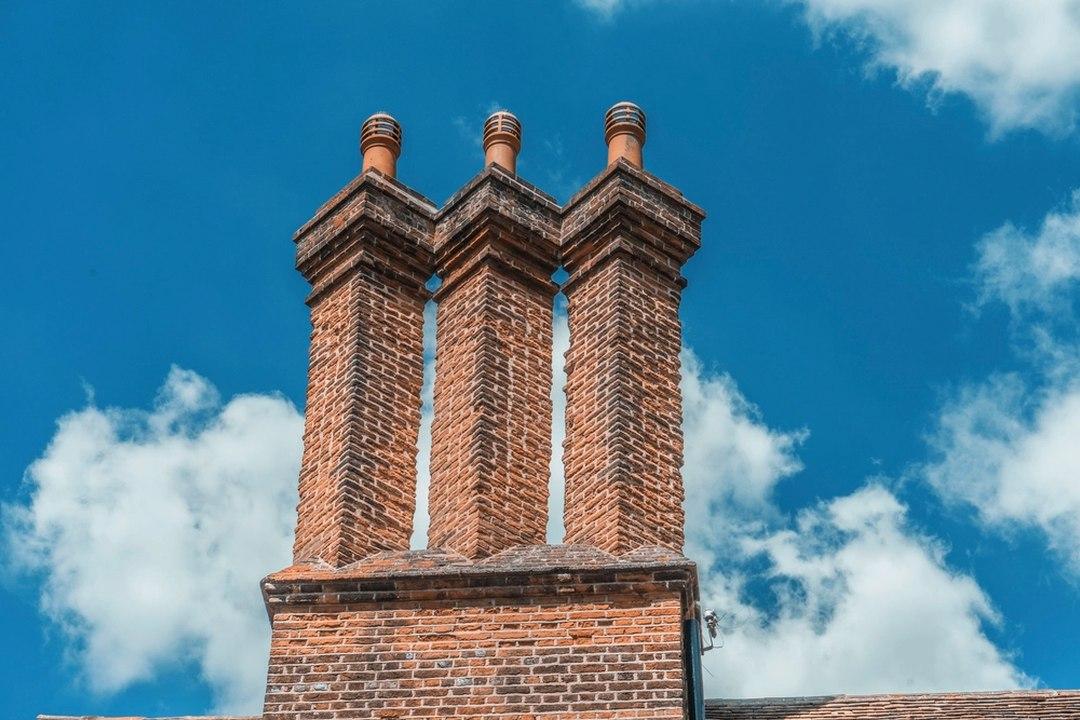
A cap is a metal lid raised on legs, with a mesh screen wrapped around the open sides. Smoke and exhaust pass through the mesh; sparks big enough to start a fire do not. Rain hits the lid instead of dropping down the flue, and birds and rodents cannot move in. A cap is open all the time, which is its strength: the protection does not depend on anyone remembering to pull a cable.
Kilbride Chimney Services fits caps too. Each one is measured first, then priced by the number of flues and how big the top is.
The top-sealing damper
This one is a hinged plate that closes the flue from above. A spring holds it open and a cable running down to the firebox pulls it shut, or the other way round depending on the make. Closed, it seals far tighter than the old cast iron plate down at the throat of the fireplace. That keeps heated or cooled air in the house, stops cold drafts and, while the fireplace is not in use, shuts the flue against embers carried in on the wind.
Open, with a fire going, it does nothing to stop sparks leaving. That is the gap. A top damper guards against fire getting in while the hearth is cold; it does not stop your own fire's sparks getting out.
Many models come with a screened hood mounted over the plate, which makes the unit do both jobs. On a wood-burning chimney that combined unit is the version we usually fit.
Side by side
| Question | Spark arrestor cap | Top-sealing damper |
|---|---|---|
| Holds back sparks during a fire | Yes | Only with a screened hood |
| Keeps blown embers out | Mostly | Yes, when shut |
| Keeps rain out | Yes | Yes, when shut |
| Stops drafts and heat loss | No | Yes |
| Moving parts | None | Spring, plate and cable |
| Cost with us | quoted after we measure | Written quote after we see the flue |
Which one goes on first
If the chimney has no cap and you burn wood, the cap goes on first. It is the cheaper part, and it covers the risk that starts in your own grate. If the old throat damper is rusted open, warped or missing, a top-sealing damper with a screened hood may make more sense than repairing the old plate, because one unit settles both problems.
Gas fireplaces change the answer. A gas log set throws few sparks, so the screen matters less for fire leaving and more for debris arriving. Many vented gas log sets also require the damper to stay fixed open, and then a top damper has to be clamped or left out altogether. We read the appliance label before suggesting one.
Get a written price for the top
Once we know what the old damper is doing and whether a cap is already there, the answer is usually plain. Ask for a quote on the top of your chimney and say whether you burn wood or gas. The damper side is priced in writing after we have looked down the flue, since its size, the state of the tile and the strength of the crown all decide which unit fits.
How we size the top
Before either part is ordered, we measure the flue tile, the height it sticks up above the crown, and the outside of the crown itself. Caps that clamp to the tile need a tile standing proud of the crown by enough to grip. Top dampers fix over the tile and need a flat, sound surface around it. On stacks with two flues we look at whether one cover across the whole top would do a better job than two separate units. Those measurements, plus the photos, go into the written quote, so you can see why one unit was chosen over another and what each one would cost to fit.
What we check either way
Both parts fix to the top of the masonry, so the crown is checked first. A cracked crown is repaired, or at least noted, before anything is bolted to it. We also put a light down the flue: neither part helps much if the flue under it is lined with creosote. If it is, a sweep from $435 can be done in the same visit.
The seasonal answer
For wildfire protection the cap is the priority, and the months before the windy season are the time to fit it. A top damper is as much a comfort and energy upgrade as a fire one, and it can follow later in the year. If you do only one thing before October, fit the screen.
Book a visit in Cudahy
We fit caps and top dampers in Cudahy, Montebello, Rosemead and the nearby parts of Los Angeles. There is more on our damper repair page and our cap installation page. When you are ready to have the top looked at, write to us through the contact page.
Ready Before the Wind Picks Up?
Kilbride starts on the roof with the cap, the spark mesh and the crown, then photographs each finding and writes a price for it. We work from Cudahy out to Montebello, Rosemead and across Los Angeles.